
I dedicate this piece to my beloved mother, Ioana Yildizhan. She was an immigrant, and through the way she lived her life, she taught me how deeply important culture is to our mental health. I know she is watching over me from the sky.
We tend to talk about mental health as if it speaks one language everywhere. Anxiety, depression, grief, trauma, self-esteem; these words get used as if they meant the same thing in every home, every culture. But while emotional pain is universal, how people make sense of it, express it, and respond to it is not. Culture runs through all of it. Especially when we think of how people are even allowed to express it in some cultures.
It shapes how we see ourselves (as the home we are born into shapes us), how we relate to our families, whether we talk about our feelings (or even being able to define them), what counts as normal behaviour. Because of this, no single framework can fully explain mental health across every context (Moleiro, 2018). A trait that looks super healthy, for example being independent or expressive, in one setting can be read entirely different in another: distant, abnormal, careless.
We all carry our upbringing with us, like an invisible backpack; we are often afraid to look inside and try to understand what is in it. Most of what's inside it — the assumptions, childhood learnings, the sense of what's “normal” — was packed in the early years before we were old enough to choose (Kärtner et al., 2020). Making sense of someone's mental health (especially in psychological counseling settings) means understanding the world they were born and raised in. Because a person cannot be thought of separately from their culture.
Where Does The Culture Stand?
In mental health care, sometimes a single approach is assumed to fit everyone well. Research on culture and psychopathology points out that social and cultural context shapes how psychological difficulties develop, how people experience them, and how they get interpreted by others (Kirmayer & Ryder, 2016). So, it is important to consider more than one cultural lens.
Some cultural environments center the individual. Autonomy, personal choice, boundaries and taking care of your own needs are read as healthy. Other environments center relationships — family identity, and belonging (Balkir et al., 2013). This is such an important topic in 1:1 settings, such as the relationship between a psychologist and a client, as psychologists may fall into the trap of assuming that their own understanding of “healthy” patterns should apply the same when listening to another person’s story.
Before judging another person's reality, it is more valuable to try to understand what this person brings from their cultural background. That is really vital for the client to feel understood and heard. This is essentially what culturally sensitive care is trying to do.
When the Body Speaks
Not everyone reaches for the word “anxious.” Some people describe headaches, stomach trouble, tight muscles, dizziness, exhaustion, or chest tightness instead. These aren't purely physical experiences. The mind and body cannot really be separated. When the mind cannot talk or cannot find a space to talk, the body starts to speak.
The body carries and signals mental overload, so that a tight chest or an irritable stomach becomes part of what anxiety feels like.
Cross-cultural psychiatry research explains that the specific bodily sensations people notice during anxiety or panic, and the meaning they give them, vary across cultural contexts (Hinton & Hinton, 2002).
For a psychologist, this matters a lot. Listening only for psychological vocabulary means missing important information. Someone may not know how to identify or verbalize their feelings by saying, “I’m anxious.” Instead, they might simply say that their stomach hurts every time before going on a date. That statement deserves to be recognized as emotional information.
Cultural Sensitivity Is More Needed Than We Think
It's easier to think of cultural sensitivity as a set of facts to memorize. For example, what people in that culture eat, how they celebrate, how their families are typically structured. That kind of knowledge is really important, but it isn't the whole picture, we need to know more than that.
Sue, Arredondo, and McDavis (1992) described multicultural counseling competencies built on three things: awareness of your own cultural assumptions, knowledge of other cultural perspectives, and the skill to act on both.
Awareness of your own assumptions is the part that's so easy to underestimate. Mental health workers aren't neutral observers; they are human as well. They also walk into the room carrying their own upbringing and ideas about what a “healthy” pattern looks like. So, the first question isn't always, “What's going on with this person, also considering their own culture?”. A client from a collectivist background may have a relationship with their family that looks nothing like what we assumed it would.
Mental Health Is So Much About Relationships
Many times, we immediately think that setting boundaries and prioritizing your own needs sits at the center of wellbeing. But for someone whose sense of self is woven into community, choosing yourself in every situation may not be helpful without first understanding and internalizing the idea behind it.
This does not mean excusing harm because it's framed as cultural. Cultural sensitivity is not a justification for discrimination, enmeshment, racism, or someone constantly invading your personal space. It means taking the time to understand the meaning behind a person's choices. As an example, staying close to family or family traditions can be a collective need. Thus, while exploring those family bonds, we need to try to understand the needs of the person, then try to see if there are alternative ways to meet those needs.
Psychological counseling is there to support people in understanding their own choices, their relationship with their background, and the reasons behind them, while asking the question, “Do these really serve their purpose?’’ It also helps people figure this out within their actual cultural and social world.
A Unique Way of Thinking About Mental Health
Cultural sensitivity isn't only a clinical skill. It's a way of paying attention to people in our lives, at work, while shopping at the grocery store, or when our best friend loses someone they love.
Mental health doesn't happen in a vacuum, removed from people's lives. It's shaped by where we're from, what we carry in our invisible cultural backpack, who raised us, the languages we speak, the communities we feel we belong to, our religion, and the meanings we've learned how to suffer and how to go through pain.
That's why two people going through something that looks the same from the outside can experience it in completely different ways. Imagine two people who recently lost a loved one. Both grieving processes will be so unique as fingerprints: one may constantly need to express their feelings, while the other may find themselves constantly working. Thus, we as people need to try to understand what the other person needs in that particular moment. In the end, one may end up grieving out loud, while another grieves in silence and experiences that quiet as a reflection of individual needs and cultural history. It is clear that both are legitimate ways of grieving. Of course, it is crucial to distinguish this from repression in such cases.
It should not be the job of mental health workers to decide whose grief counts more, or whose way of coping is the “correct” one. The job is to listen, be there, and create space for the person.
Translating Worlds
Mental health may be a universally human experience, and we often think it should be addressed in a clinical setting, but it is never lived in the abstract. It's lived inside families, languages, communities, histories, and relationships.
That's the whole case for culturally sensitive mental health care. It's about understanding how psychology and culture interact with each other and have direct influence on us. After migration, that is one of the reasons why people start to show unfamiliar patterns or attitudes that they were not used to (De Leersnyder, 2017).
Maybe the more useful question to bring into any relationship is: What does the world look like from where they're standing? Somehow, we need to put ourselves in the other person’s shoes to understand how the world looks from their perspective. Then we may have a chance to start actually meeting them where they are.
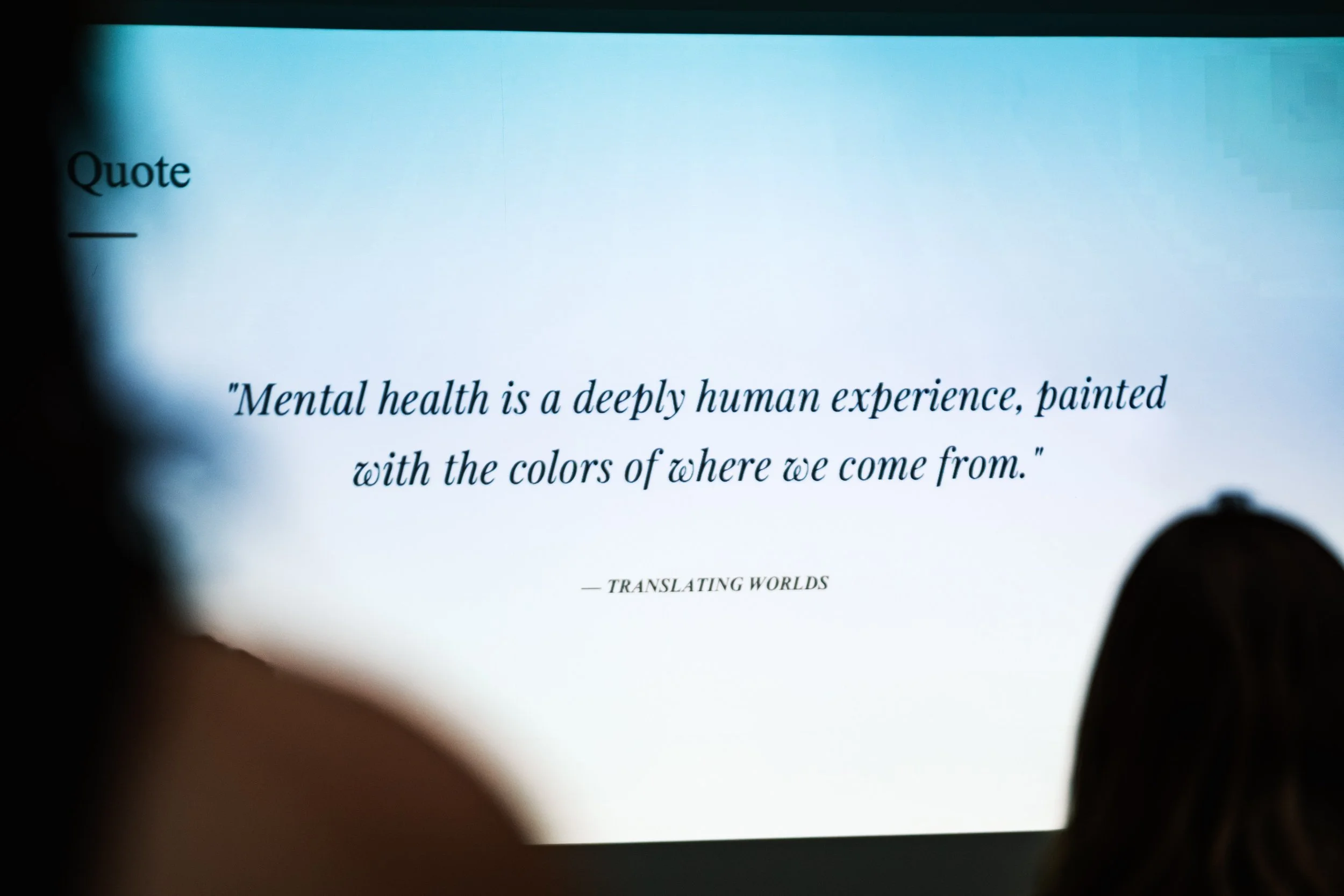
Mental health is a deeply human experience, painted with the colors of where we come from and we should understand that culture is a conversation that keeps going.
About the author
Zeynep Yildizhan Kok is a Clinical Psychologist with experience in individual, child, and adolescent counseling, refugee mental health, and workplace mental health. Her work currently focuses on migration and its psychological outcomes, with a particular interest in culturally sensitive psychological support. You can find her on Instagram at @psy.zeynepyildizhan.
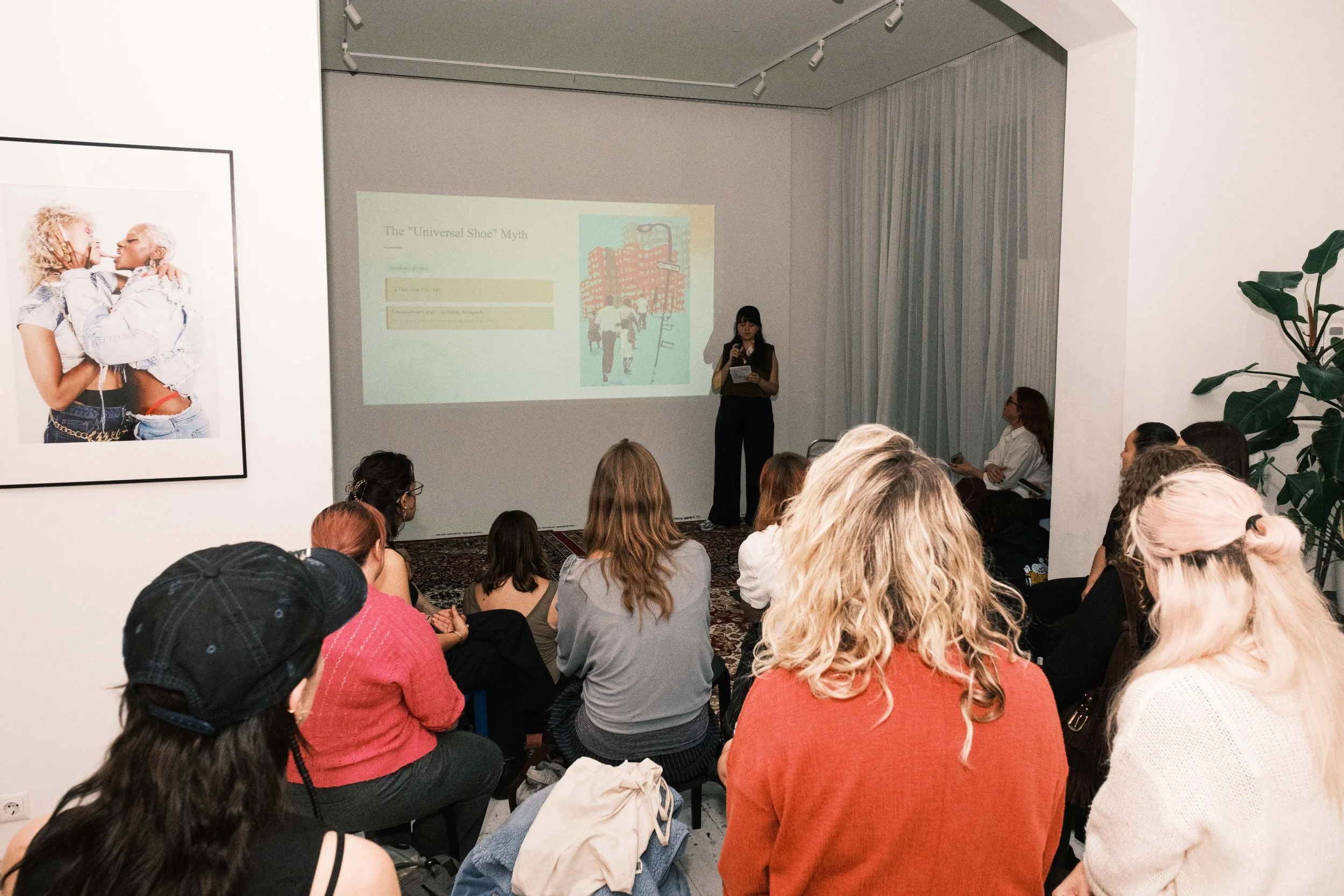
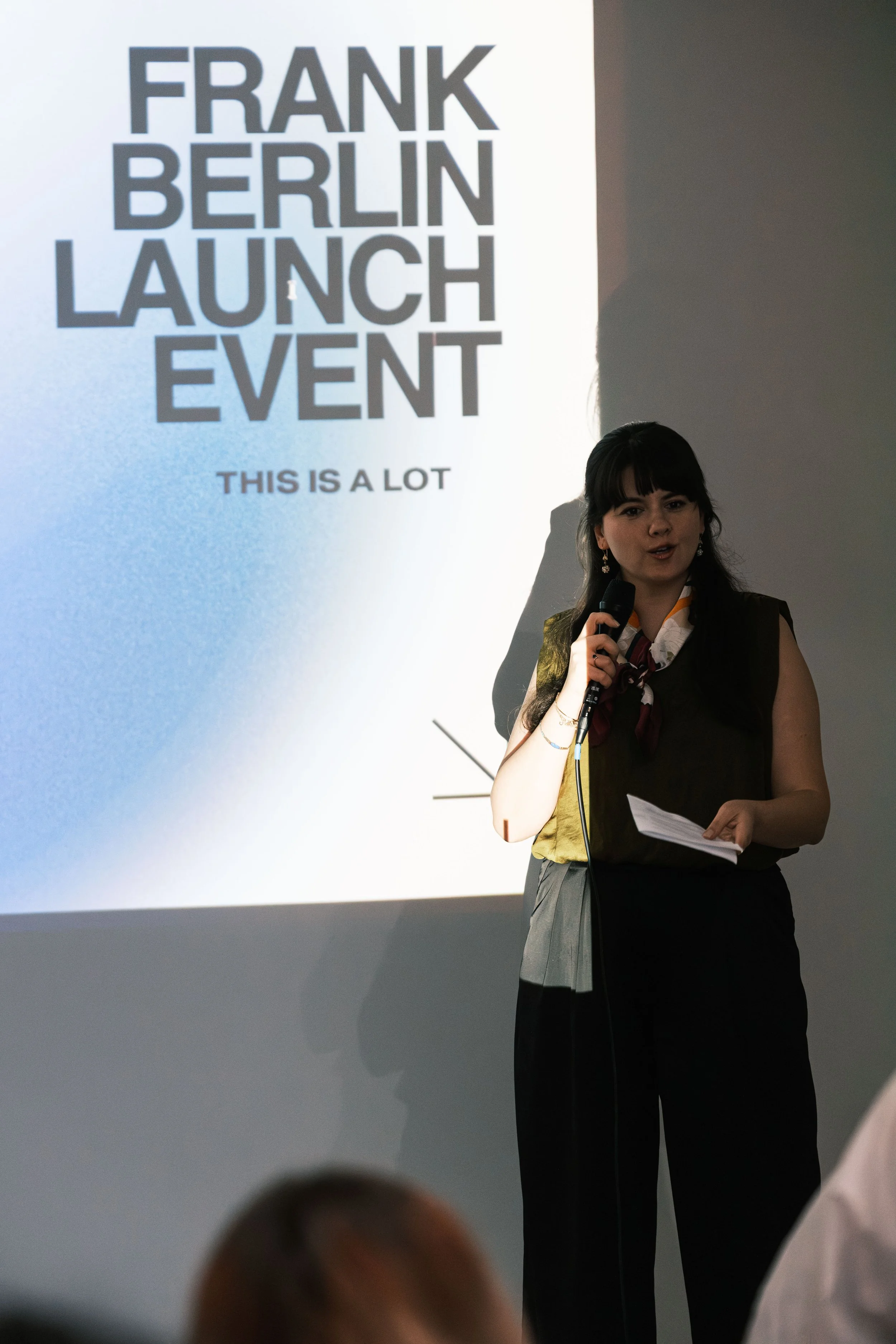
Zeynep at the FRANK BERLIN Launch Event. Photography by Tu Nguyen.
ReferencesBalkir, N., Arens, E. A., & Barnow, S. (2013). Exploring the relevance of autonomy and relatedness for mental health in healthy and depressed women from two different cultures: When does culture matter? International Journal of Social Psychiatry, 59(5), 482–492.De Leersnyder, J. (2017). Emotional acculturation: A first review. Current Opinion in Psychology, 17, 67–73. https://doi.org/10.1016/j.copsyc.2017.06.007Hinton, D., & Hinton, S. (2002). Panic disorder, somatization, and the new cross-cultural psychiatry: The seven bodies of a medical anthropology of panic. Culture, Medicine and Psychiatry, 26(2), 155–178. https://doi.org/10.1023/A:1016374801153Kirmayer, L. J., & Ryder, A. G. (2016). Culture and psychopathology. Current Opinion in Psychology, 8, 143–148. https://doi.org/10.1016/j.copsyc.2015.10.020Kärtner, J., Schuhmacher, N., & Giner Torréns, M. (2020). Culture and early social-cognitive development. Progress in Brain Research, 254, 225–246.Moleiro, C. (2018). Culture and psychopathology: New perspectives on research, practice, and clinical training in a globalized world. Frontiers in Psychiatry, 9, 366. https://doi.org/10.3389/fpsyt.2018.00366Sue, D. W., Arredondo, P., & McDavis, R. J. (1992). Multicultural counseling competencies and standards: A call to the profession. Journal of Counseling & Development, 70(4), 477–486. https://doi.org/10.1002/j.1556-6676.1992.tb01642